UR028/KH0263 - Catalog Information
| Section | Information | ||||||||||||||||||||||||||||||||
|---|---|---|---|---|---|---|---|---|---|---|---|---|---|---|---|---|---|---|---|---|---|---|---|---|---|---|---|---|---|---|---|---|---|
| Statistics: |
|
||||||||||||||||||||||||||||||||
| UR028/KH0263 | 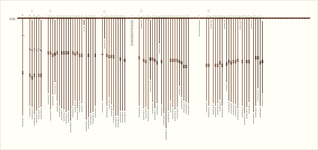 |
||||||||||||||||||||||||||||||||
| Pendant Pendant Sum |  |
||||||||||||||||||||||||||||||||
| Colored Pendant Sum | 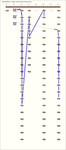 |
||||||||||||||||||||||||||||||||
| Subsidiary Pendant Sum |  |
||||||||||||||||||||||||||||||||
| Ascher Decreasing Group | 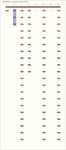 |
||||||||||||||||||||||||||||||||
| DataFile: | UR028 |
||||||||||||||||||||||||||||||||
| Notes: | Ashok's Notes: KH0263 is discussed extensively in Chapter 3 of Gary Urton's book Inka History in Knots: Reading Khipu as Primary Sources.Much of what follows in these notes is derived from this primary source! KH0263 is one of six khipus that are tied together, in sequence, starting with KH0293, KH0259, KH0260, KH064, then KH0263, then finally KH0262. These village khipus come from the Atarco region, in the the famous south-coast Peruvian location of the Nazca valley. Urton believes these are census data, and KH0259 and KH0264 being "almost certainly" census khipus. The khipu is organized into three sections: (Group 1) = cord p1, (Group 2) = cords p2–p4, and (Group 3) = cords p5–p74. Cord p1 is the sum of p2-p4 including subsidiaries. Cord p5-p74 are grouped into various five-cord sets. Cluster 3,6, and 8 have 20 cords - 4 color-banded sets of 5 cords, alternating between MB (Moderate-Brown) and AB (Light-Brown). Cluster 4 is similar, with 2 alternate colored, color-banded, sets of 5 cords. AB sets are described by Urton as "odd" set, and MB sets as "even". The sums of of odd sets and of even sets group to 104. "Odd" AB five-cord set sums match p2, p3, and p4 while Even"" MB five cord sets match the subsidiaries p2s1, p3s1, and p4s1, although there is an error match for p4, which comes out as 14, instead of a matching value of 12. These "off-by-one" errors are not unusual. Urton proposes that the MB/dark cords represent a moiety or ayllu affiliation that is "hurin" (Quechua:lower) to that of the "hanan" (Quechua:upper) ayllu clan. Hence the sum being represented as a "subsidiary" cord. |
||||||||||||||||||||||||||||||||
| Bibliography: |
Bibliography for UR028/KH0263:
|