AB001 - Group Group Sums
Drawings:
Group-Group Sum:
Click on Image to View Larger

Individual Group Group Sums: - Click on column name to sort
| # | Group Group Sum Schema | Group Sum Value | Is Top Group | Is Duplicate Group | Group Position Difference | Left Group Position (1_based index) |
Right Group Position (1_based index) |
Left Sum (1_based index) |
Right Sum (1_based index) |
|---|---|---|---|---|---|---|---|---|---|
| 1 | 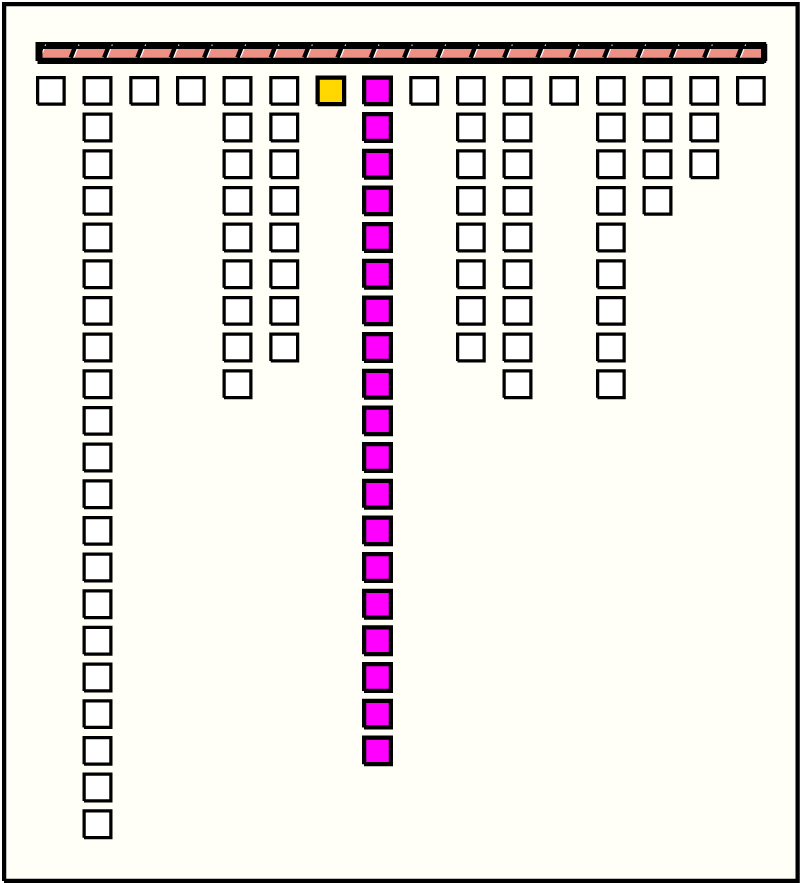 | 51 | False | False | 1 | 7 | 8 | AB@[6, 0]:51 + AB@[6, 0, 0]:36 | AB@[7, 0]:4 + AB@[7, 1]:4 + AB@[7, 2]:3 + AB@[7, 3]:3 + AB@[7, 4]:4 + AB@[7, 5]:0 + AB@[7, 6]:0 + AB@[7, 7]:0 + AB@[7, 8]:2 + AB@[7, 9]:2 + AB@[7, 10]:0 + AB@[7, 11]:1 + AB@[7, 12]:0 + AB@[7, 13]:0 + AB@[7, 14]:1 + AB@[7, 15]:7 + AB@[7, 16]:6 + AB@[7, 17]:7 + AB@[7, 18]:7 |
Khipu Notes:
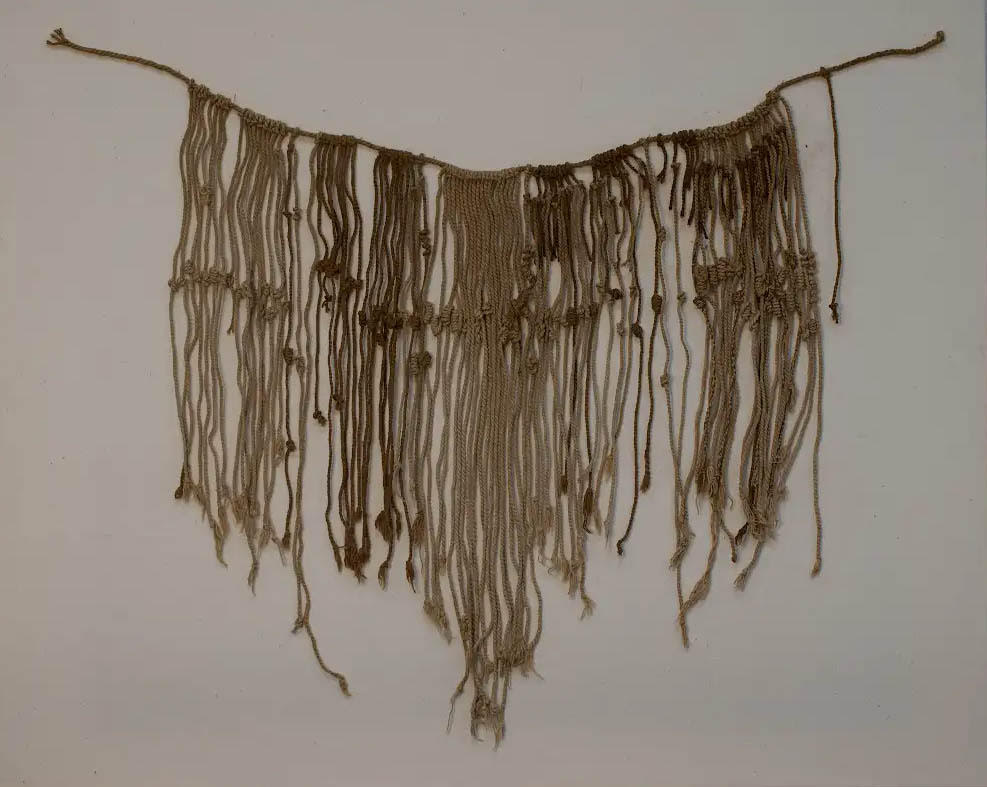
This khipu was collected by Thomas Harper Goodspeed (1887-1966). Goodspeed, a Botanist, joined UC Berkeley as director of their botanical garden. His research was focused on the taxonomy of tobacco (Nicotiana), with a special focus on South America and Australia. In 1966, his children donated his collection to UC Santa Barbara.
The khipu has been studied by Alida Jekabson, Isabella Devlin and Alicia Boswell at the Department of History of Art and Architecture at UC Santa Barbara, whose studies on khipu features and radiocarbon dating indicate the khipu was created between 1500 and 1632 in the late Inka/early Colonial period. It was collected in the 1930s/40s and donated to the University Art Museum (now the Art, Design and Architecture Museum) at UC Santa Barbara in 1966. It was mounted (backwards) on canvas in 1994.